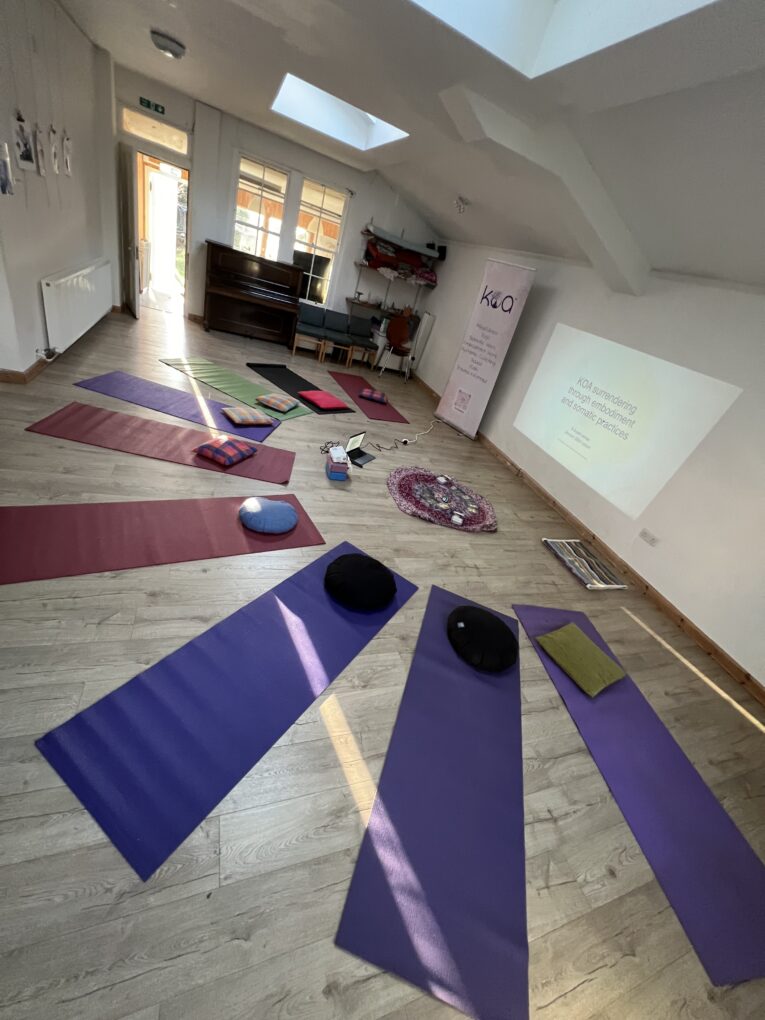
Embodied leadership workshop
Embodied leadership is a leadership approach that emphasises the integration of mind, body, emotions and behaviour. It recognises that leadership is not only about strategy, intellect or communication skills, but also about how a person physically carries themselves, regulates their emotions and responds to pressure.
In embodied leadership, the body is seen as a source of information and intelligence. Posture, breathing, tone of voice, facial expression and movement all influence how others experience a leader. A leader who is grounded, steady and aware of their physical presence often creates a sense of safety and trust within a team.
A key part of this approach involves somatic awareness. The term somatic comes from the Greek word soma, meaning body. Somatic practices help leaders notice physical sensations, tension patterns and habitual reactions. By becoming more aware of what is happening in their body, leaders can recognise stress responses earlier and choose more thoughtful actions rather than reacting automatically.
This links closely to the nervous system. The nervous system governs how we respond to challenge, uncertainty and interpersonal dynamics. When a leader is in a regulated state, their nervous system supports clarity, empathy and steady decision making. When they are dysregulated, for example in fight, flight or freeze responses, their communication and judgement can become reactive or defensive.
Embodied leadership therefore includes developing the ability to regulate the nervous system through practices such as conscious breathing, grounding exercises, reflective pauses and movement. When leaders can return themselves to a calm and alert state, they help co regulate others. Teams often take cues from a leader’s nervous system, so a regulated leader can foster psychological safety, resilience and collaborative problem solving.
In essence, embodied leadership is about alignment between what a leader thinks, feels, says and does, with awareness of the body and nervous system as central to effective leadership.
Embodied Leadership: A Half Day Workshop for Leaders
Lead with presence. Respond with clarity. Create cultures of safety and trust.
This interactive half or full day workshop introduces leaders to the principles of embodied leadership, integrating somatic awareness and nervous system understanding into everyday leadership practice. Designed for modern workplaces navigating complexity and change, this experience supports leaders to move beyond purely cognitive approaches and develop steadiness, compassion and relational intelligence.
Why embodied leadership matters for every leader
Leadership is not only communicated through words and strategy. It is transmitted through tone, posture, pace, energy and nervous system state. Teams constantly and unconsciously read their leader’s cues. When a leader is regulated, grounded and self aware, this fosters calm, trust and psychological safety. When a leader is reactive or dysregulated, uncertainty and tension can quickly spread.
All leaders influence the emotional climate of their teams. An embodied leader understands their own stress patterns, recognises early signs of overwhelm and can pause before reacting. This reduces conflict, supports clearer decision making and creates space for others to contribute confidently. Embodied leadership strengthens resilience, improves collaboration and supports sustainable performance across teams.
What makes this workshop different
This is a trauma informed, diversity and choice led learning space. Participation in practices is always invitational. Psychological safety, consent and autonomy are central to the design. The workshop recognises that every nervous system is unique and honours individual pacing and boundaries.
What you will explore
- Foundations of embodied leadership
- Nervous system awareness and its relevance to leadership
- An introduction to the autonomic nervous system and stress responses
- Understanding fight, flight, freeze and fawn patterns in ourselves and others
- Somatic tools to support regulation and grounded decision making
- Compassion practices to strengthen resilience and relational trust
- Practical approaches to co regulation within teams
Benefits for leaders and teams
- Increased emotional regulation under pressure
- Clearer thinking and more considered decision making
- Greater confidence and embodied presence
- Stronger team trust and psychological safety
- Healthier communication and reduced conflict
- Improved collaboration and engagement
- Reduced reactivity and risk of burnout
- More somatic and nervous system awareness and knowledge
- Practical tools that can be applied immediately in the workplace
Embodying leadership actively
To truly embody leadership, we need to work with the soma. The nervous system and somatic practices help us explore how we respond to stress, pressure, staff management, and our own emotions. Being an embodied leader means understanding our nervous system states and developing greater awareness of the body. When we can notice how our body reacts in moments of challenge or responsibility, we have more choice in how we respond rather than reacting automatically.
My workshops offer practical experiences that invite participants to explore what being embodied as a leader means for them. Through simple somatic practices, we build awareness, regulation, presence, and the capacity to lead with clarity and care.
Some practice examples
- Grounding through the feet – Standing with weight evenly distributed, sensing the contact with the floor to cultivate stability and calm authority.
- Centred breathing – Slow diaphragmatic breathing to regulate the nervous system and support clear, steady decision-making.
- Postural alignment – Maintaining an upright, relaxed posture (open chest, soft shoulders) to project confidence and approachability.
- Body scanning – Regularly noticing sensations in the body to detect tension, stress, or emotional cues before reacting.
- Expansive stance practice – Practising open, spacious body positions to encourage confidence, courage, and visibility in leadership situations.
- Intentional pacing – Slowing physical movements and speech to create presence, clarity, and thoughtful responses rather than reactive ones.
- Voice resonance awareness – Speaking from the diaphragm to produce a grounded, steady tone that communicates credibility.
- Boundary sensing – Noticing physical signals (tightness, contraction, leaning forward/back) to understand when to assert, listen, or step back.
- Co-regulation through eye contact – Soft, attentive eye contact and relaxed facial muscles to build trust and psychological safety with others.
- Micro-pauses before responding – Taking a brief breath or moment of stillness before speaking, supporting intentional leadership.
- Embodied walking – Walking slowly with awareness of stride and posture to reset the nervous system and return to centred leadership presence.
- Hand and gesture awareness – Using deliberate, congruent gestures to reinforce communication and authenticity.
- Tension release practices – Gentle stretching, shaking, or shoulder rolls to discharge accumulated stress and maintain composure.
- Spatial awareness – Noticing how one occupies space in a room (distance, orientation, movement) to support inclusive and confident leadership.
Participants will leave with a deeper understanding of how their nervous system shapes their leadership style and directly influences team culture, along with accessible practices and resources to support sustainable performance and wellbeing.
Ideal for senior leaders, managers and emerging leaders who want to lead with authenticity, steadiness and compassion in complex environments.
Step into leadership that is embodied, aware and aligned.
After each workshop, all participants will receive information and resources.
Next steps:
Contact me for a free connection call. The workshop can be adapted to your needs and expectations. A full day option is available. These workshops can be offered online, in person, outdoors or indoors.