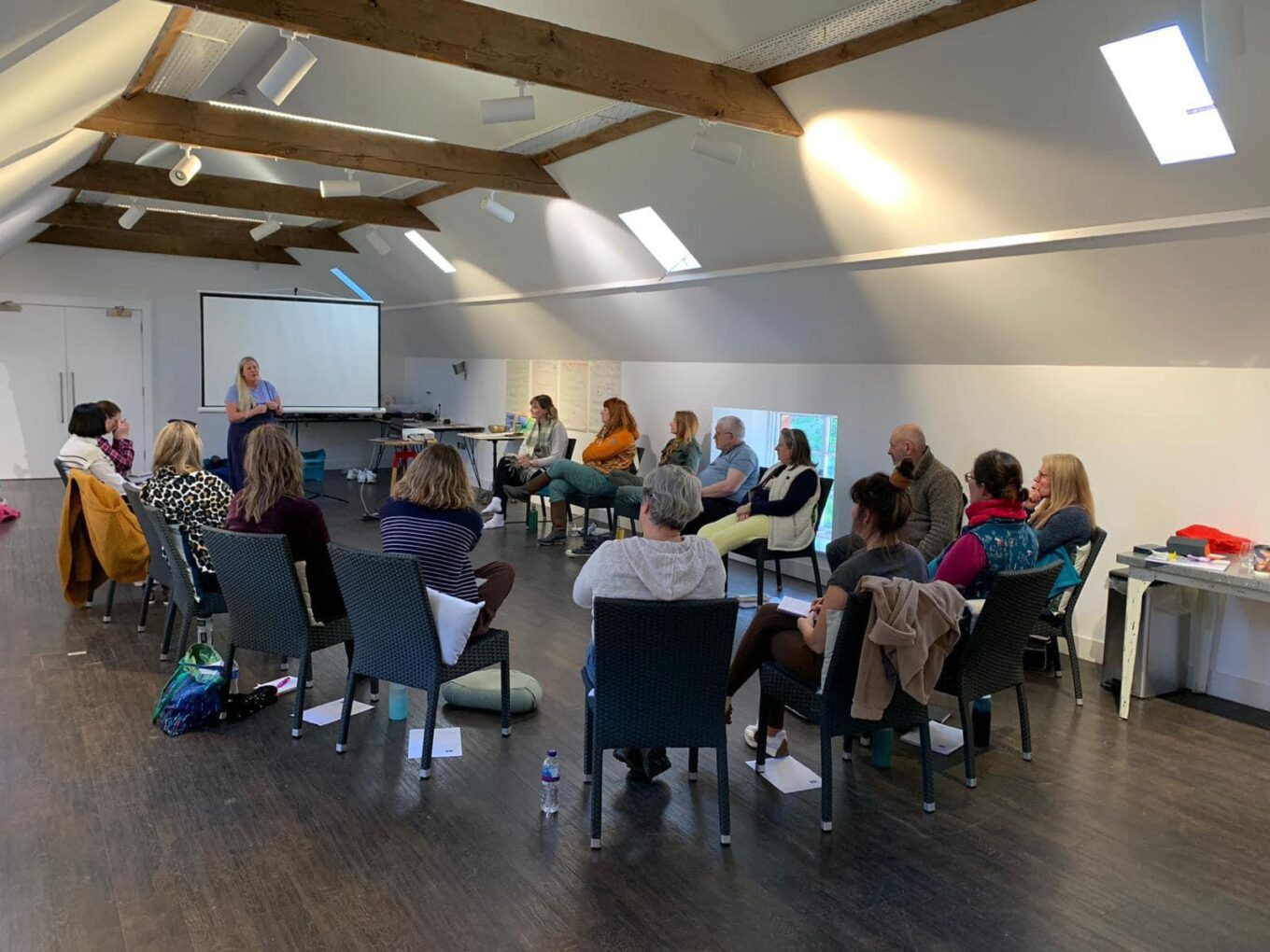
Trauma informed workshops and training days
I have worked in the social sector for over twenty years across a wide range of areas including mental health, substance misuse, counselling, eating disorders, early years education and community justice (to name a few). I have also worked with corporate companies offering coaching and training to empower and educate their employees. Having spent much of my career on the frontline of the social sector, I have a deep understanding of the importance of a trauma informed approach in all areas of practice. I currently work in community justice as a social worker within a therapeutic, trauma informed team, and I also offer trauma informed services through my business KOA. I am trained in trauma informed practice to a specialist level and have a strong understanding of how trauma impacts individuals at a nervous system level. My approach integrates this knowledge to promote safety, empowerment, inclusivity and acceptance.
In my view, trauma informed practice should underpin all professional work. Living in Scotland, I recognise the national ambition to create a trauma informed workforce, as outlined in the Scottish Government’s Trauma Informed Practice Toolkit. This approach recognises that trauma is widespread and can have a significant effect on people’s wellbeing, relationships and engagement with services. A trauma informed way of working ensures that professionals across all sectors understand the impact of trauma and respond in ways that promote safety, trust, empowerment and recovery, rather than risk re-traumatisation. It is about creating compassionate and inclusive environments where people feel valued and supported, regardless of their experiences.
What can I offer you?
- Free connection call – discuss the specific needs of your service and explore how I can tailor my training or workshops to meet them.
- Bespoke workshops and training – create programmes designed specifically to address your service’s requirements and goals.
- Flexible session options – workshops or training can be 2 hours, a half-day, or a full day, online or in person.
- Optional wellbeing activities – choose from a menu of services to enhance the session, such as mindfulness, sound baths, or forest bathing.
- Example programme including wellbeing – a full day could include comprehensive training on trauma-informed practice, combined with a mindfulness session, sound bath, and forest bathing experience.
- After each session you will receive an information and resource sheet which can be shared with all participants.
Trauma informed principles that underpin my work:
• Safety – ensuring people feel physically and emotionally safe in all interactions
• Trustworthiness – building relationships based on honesty, reliability and transparency
• Choice – supporting individual autonomy and offering meaningful options wherever possible
• Collaboration – working alongside people as equal partners in decision making and service design
• Empowerment – recognising and building on people’s strengths, resilience and capacity for recovery
I have developed a variety of 4 part training programmes that offer professionals the opportunity to explore and understand trauma informed practice in depth. The 4 part trainings/workshop examples below provide an invitational and supportive space for professionals to learn, reflect and grow. The intention is to create workplaces that are compassionate, inclusive and better equipped to support the wellbeing and development of everyone within them.
What to expect:
During these trainings/workshops, you will (not exhaustive):
- Gain an understanding of trauma informed principles and how they apply in different professional contexts
- Learn about the key principles of trauma informed working, including safety, trust, choice, collaboration and empowerment
- Explore ways to integrate trauma informed approaches across all areas of work, from management to employees
- Understand how trauma informed practice can be empowering for individuals and teams
- Reflect on the barriers, challenges and difficulties that may arise when working in a trauma informed way
- Share experiences and develop practical solutions to help overcome these challenges
- Have space to reflect as a group and explore how trauma informed practice can be integrated into your own work
- Develop an understanding of what trauma is and what it is not
- Learn about how the nervous system responds to trauma and how this influences behaviour and interactions
- Explore the different levels and impacts of trauma
- Recognise the importance of inclusion in creating safe and supportive environments for everyone
- Learn some practices that can help the nervous system regulate in moments of distress
References: https://www.gov.scot/publications/trauma-informed-practice-toolkit-scotland/
! Please read my terms and conditions and privacy policy on www.koa-edinburgh.co.uk before booking
Important
If you would like to book me for a training or workshop session please contact me to plan a free connection call. The below trainings are examples, however I can create a bespoke training or workshops that suites your needs.
TRAININGS (4 DIFFERENT TRAINING IDEAS)
🌱 Training 1: Basics – What is Trauma Informed Practice
Focus: Foundational understanding of trauma and core trauma informed principles.
Format: Online or in person
Duration: 4 x 2-hour sessions | 2 half days | or 1 full day
What to Expect
This introductory programme provides a clear and accessible foundation in trauma and its impact. Participants will explore how trauma affects the brain, body, behaviour and relationships. The training introduces key trauma informed principles — safety, trust, choice, collaboration and empowerment — and supports participants to reflect on how these apply in everyday interactions.
Sessions include presentation input, facilitated discussion, reflective exercises and practical examples. The learning environment is structured to feel safe, supportive and non-judgemental.
Outcomes
Participants will:
- Develop a clear understanding of what trauma is and how it presents
- Understand basic nervous system responses (fight, flight, freeze, fawn)
- Recognise trauma responses in themselves and others
- Be offered an introduction to the window of tolerance
- Identify trauma informed and non-trauma informed approaches
- Begin applying trauma informed principles in practice
Resources Provided
After each session, participants receive:
- Slide summaries
- Practical reflection worksheets
- Nervous system overview guides
- Trauma informed principles checklist
- Suggested reading and further learning resources
🌿 Training 2: Regulating the Nervous System – Embodied Trauma Informed Practice
Focus: Nervous system literacy, mindfulness and practical regulation skills.
Format: Online or in person
Duration: 4 x 2-hour sessions | 2 half days | or 1 full day
What to Expect
This experiential programme deepens understanding of trauma through a nervous system lens. Participants learn practical regulation tools, including grounding exercises, breathwork, sensory techniques and trauma-sensitive mindfulness practices.
The training balances theory with embodied practice. Participants will explore their own regulation patterns and develop confidence in supporting others through co-regulation and safe presence. Practices are adaptable for professional settings and designed to be accessible and realistic.
Outcomes
Participants will:
- Understand the window of tolerance and nervous system regulation
- Recognise signs of dysregulation in themselves and others
- Develop a toolkit of grounding and regulation techniques
- Practise trauma-sensitive mindfulness approaches
- Strengthen co-regulation and relational safety skills
- Create a personal resilience and regulation plan
Resources Provided
After each session, participants receive:
- Guided regulation scripts and audio practices
- Nervous system mapping tools
- Grounding and breathwork guides
- Trauma-sensitive mindfulness guidance
- Personal regulation planning templates
🌍 Training 3: Trauma Informed Organisations – Bridging Employee, Management and System
Focus: Organisational culture, leadership and systemic integration.
Format: Online or in person
Duration: 4 x 2-hour sessions | 2 half days | or 1 full day
What to Expect
This strategic programme supports organisations to move beyond awareness into meaningful culture change. Participants explore how trauma shows up within systems, including power dynamics, communication patterns, policy gaps and barriers between staff and management.
The training creates space for honest dialogue about workplace challenges while maintaining psychological safety. Participants will examine organisational practices through a trauma informed lens and identify practical improvements across leadership, supervision, feedback systems and policy.
Outcomes
Participants will:
- Understand systemic and organisational trauma dynamics
- Identify barriers between employees and management
- Recognise the impact of hierarchy and power on psychological safety
- Apply trauma informed principles to policy and procedure
- Develop strategies to improve trust, transparency and communication
- Create a phased action plan for sustainable culture change
Resources Provided
After each session, participants receive:
- Organisational self-assessment tools
- Psychological safety indicators checklist
- Trauma informed policy review template
- Leadership reflection guides
- Implementation roadmap framework
🧭 Training 4: Integrating Trauma Informed Practice into Professional Identity
Focus: Professional embodiment, reflective practice and leadership development.
Format: Online or in person
Duration: 4 x 2-hour sessions | 2 half days | or 1 full day
What to Expect
This development-focused programme supports professionals to integrate trauma informed principles consistently into their role. Participants reflect on personal triggers, communication patterns, ethical tensions and professional boundaries.
The training includes reflective exercises, scenario work and skills practice to strengthen confidence in difficult conversations, compassionate accountability and sustainable practice. Participants are encouraged to develop a strong, values-led professional identity grounded in safety and integrity.
Outcomes
Participants will:
- Increase self-awareness of triggers and stress responses
- Strengthen trauma informed communication skills
- Develop confidence in boundary setting and de-escalation
- Identify early signs of burnout and compassion fatigue
- Strengthen reflective supervision and peer support approaches
- Create a personal professional development plan
Resources Provided
After each session, participants receive:
- Reflective practice worksheets
- Communication and boundary-setting frameworks
- Burnout and compassion fatigue self-assessment tools
- Ethical decision-making prompts
- Professional growth and sustainability planning templates